



Last Updated: 12th August 2026
Where work at height cannot be avoided and collective protection is not practical, a properly designed fall arrest system can provide essential protection for operatives working near exposed edges, elevated platforms and other fall-risk areas.
At Heightsafe, we design, install, inspect and maintain bespoke fall arrest solutions for commercial, industrial and public sector buildings across the UK. Every system is developed around the specific risks, structure and maintenance requirements of the site, helping organisations protect personnel while supporting compliance with the Work at Height Regulations 2005.
From horizontal safety lines and fixed anchor points to overhead systems and temporary fall protection, our experienced team can support your project from initial site survey and design through to installation, certification, testing and ongoing maintenance.
A fall arrest system is a form of personal fall protection designed to stop a person after a fall has begun.
Unlike fall restraint, which is intended to prevent the user from reaching a fall hazard, fall arrest allows the user to work in an area where a fall remains possible and then safely arrests that fall before the person reaches a lower level or other hazard.
A typical system may include:
The exact configuration depends on the task, building structure, available fall clearance and intended number of users.
Fall arrest systems are carefully designed to allow safe movement while limiting the consequences of a fall.
In a typical system, the operative connects their harness to a certified anchor point, horizontal lifeline or overhead track using compatible fall arrest equipment.
If the user falls:
For this reason, a fall arrest system is not just an anchor and harness. It must be designed as a complete safety solution that considers the fall itself, the clearance below the user and what happens immediately afterwards.
Fall arrest is normally considered where work at height cannot be avoided and where collective protection or fall restraint cannot provide sufficient protection.
Working Near Unprotected Roof Edges
Some maintenance activities require personnel to work directly at or very close to an exposed edge.
Examples include:
Where users need to enter a fall-risk zone, a suitable arrest system may be required.
Façade Maintenance and External Building Work
Tasks involving external elevations often require personnel to operate close to building edges or suspended access points.
Fall arrest protection may be incorporated into:
Industrial and Maintenance Environments
Fall risks are not limited to rooftops.
Systems may also be required around:
Overhead solutions can be particularly effective in these environments.
Construction and Refurbishment
Construction sites frequently change as a project progresses, creating temporary areas where permanent protection may not yet be available.
Temporary anchors, horizontal lifelines and other personal systems can provide protection during specific phases of work.
Vertical Access
Fixed ladders, towers and other vertical access routes may require dedicated fall protection where the risk assessment identifies a need.
Vertical systems can allow users to remain connected while ascending or descending.
Heightsafe provides a range of systems designed to suit different applications, structures and maintenance requirements.
Horizontal Safety Line Systems
Horizontal lifelines allow users to move along a defined route while remaining continuously attached.
They are commonly used on:
These systems can often be configured around corners and obstacles to provide coverage across complex roof layouts.
Fixed Anchor Points
Fixed anchors provide defined attachment points for individual tasks or specific work areas.
They can be suitable where access is relatively infrequent and where a full horizontal lifeline would be unnecessary.
Common applications include:
Vertical Fall Arrest Systems
Vertical safety systems provide protection during ladder access and other vertical movement.
Depending on the design, they may use:
These systems help reduce risk during ascent and descent where other protection measures are not suitable.
Overhead Fall Arrest Systems
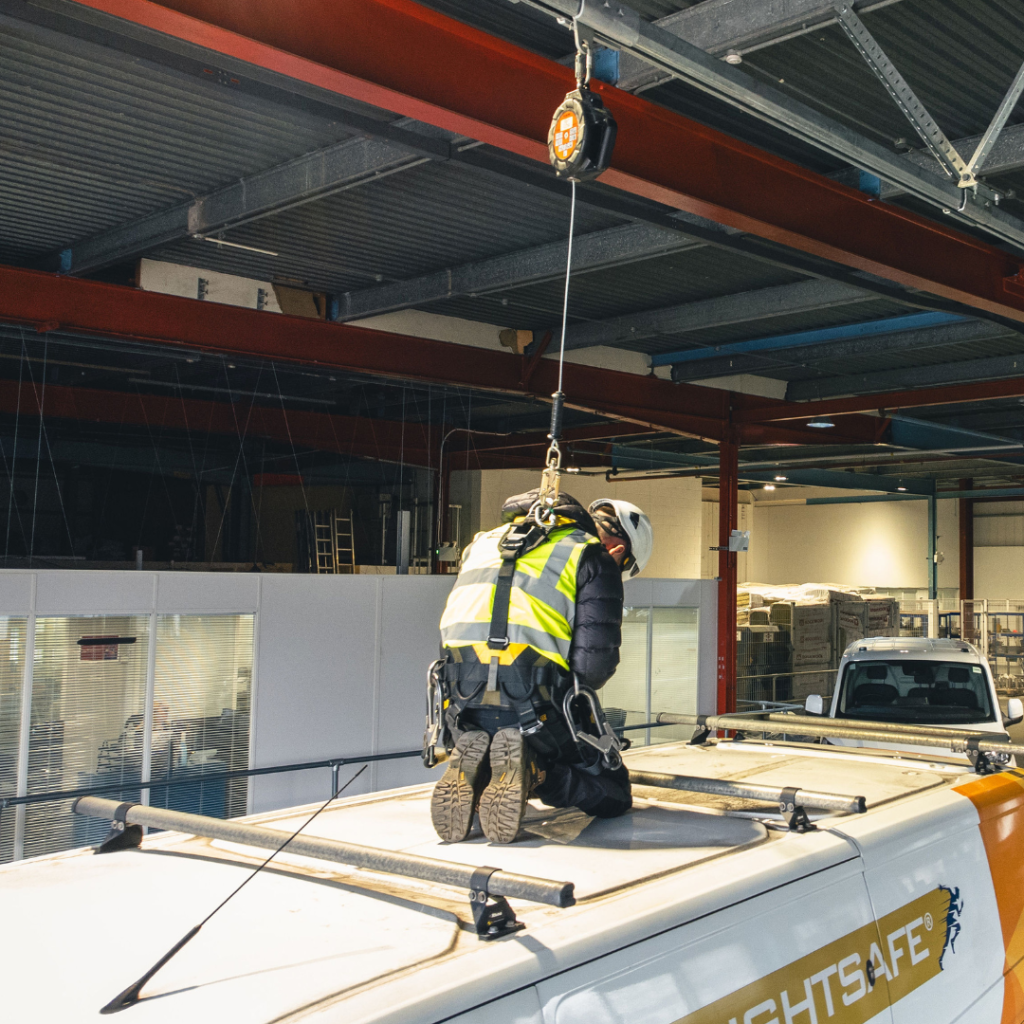
Overhead systems position the anchor point above the operative.
This can reduce free-fall distance and make them particularly effective in industrial environments where workers require movement beneath a defined route.
Typical applications include:
Temporary and Mobile Fall Protection
Temporary systems can provide flexible protection for short-duration work or locations where permanent installation is not practical.
Options may include:
These solutions are useful for reactive maintenance and changing work areas when correctly assessed and deployed.
Whether you require a new system, an upgrade to existing protection or an assessment of your current working-at-height arrangements, Heightsafe can help.
Our specialists will assess your building, working activities and maintenance requirements before recommending a solution designed around the specific risks of your site.
From horizontal lifelines and anchor systems to overhead fall protection and temporary solutions, we provide complete support from survey and design through to installation, testing, maintenance and training.
Contact Heightsafe today to arrange a site survey, request a quotation or speak to one of our Fall Protection specialists.
FA Systems support compliance with the Work at Height Regulations 2005, which require employers and duty holders to:
Systems must also be designed and installed by competent professionals, and users must be properly trained.
Heightsafe Systems help organisations meet these requirements through expert design, installation and ongoing compliance support.
Our systems are used across a wide range of commercial and industrial environments, including:
Each environment presents different risks, which is why system selection should always follow a suitable assessment.
Since 2009, Heightsafe has supported organisations throughout the UK with specialist Work at Height, Fall Protection and Façade Access solutions.
Our complete service includes:
By combining design, installation and long-term compliance support under one roof, we provide clients with a consistent solution throughout the lifecycle of their safety systems.
A fall arrest system is personal fall protection designed to stop a person safely after a fall has started. It typically includes a harness, anchorage and connecting device such as a lanyard or self-retracting lifeline.
Fall arrest may be required where work at height cannot be avoided and where collective protection or fall restraint cannot adequately protect the user.
Fall restraint prevents the user from reaching a fall hazard. Fall arrest allows access to a fall-risk area but arrests the user if a fall occurs.
Equipment may include harnesses, anchors, lifelines, energy-absorbing lanyards, self-retracting lifelines and compatible connectors.
Yes. Where a user could be suspended following a fall, a suitable rescue procedure should be planned before the work begins.
Get in touch with Heightsafe’s friendly, professional team today for free, no obligation advice on your Work at Height requirements.
Simply complete the below and one of our experts will be in touch.


