Contact us today to learn how our Work at Height Systems can improve safety, ensure compliance, and make maintenance more efficient for your buildings.
Let Heightsafe be your trusted partner in delivering reliable solutions that protect your people and safeguard the long-term integrity of your property.
Guardrails & Handrails: Create safe perimeters on rooftops and elevated workspaces with permanent or freestanding guardrail and handrail systems. Designed for durability and compliance, they provide collective protection without compromising building aesthetics.
Safety Line Systems: Flexible and discreet, our horizontal and vertical lifeline systems allow operatives to work securely while navigating rooftops and complex structures. Every system is engineered to BS EN 795 standards and tailored to your site’s requirements.
Protective Skylight Covers: Fragile skylights pose a significant fall risk. Our protective covers and screens safeguard operatives while maintaining light transmission, ensuring safety without sacrificing functionality.
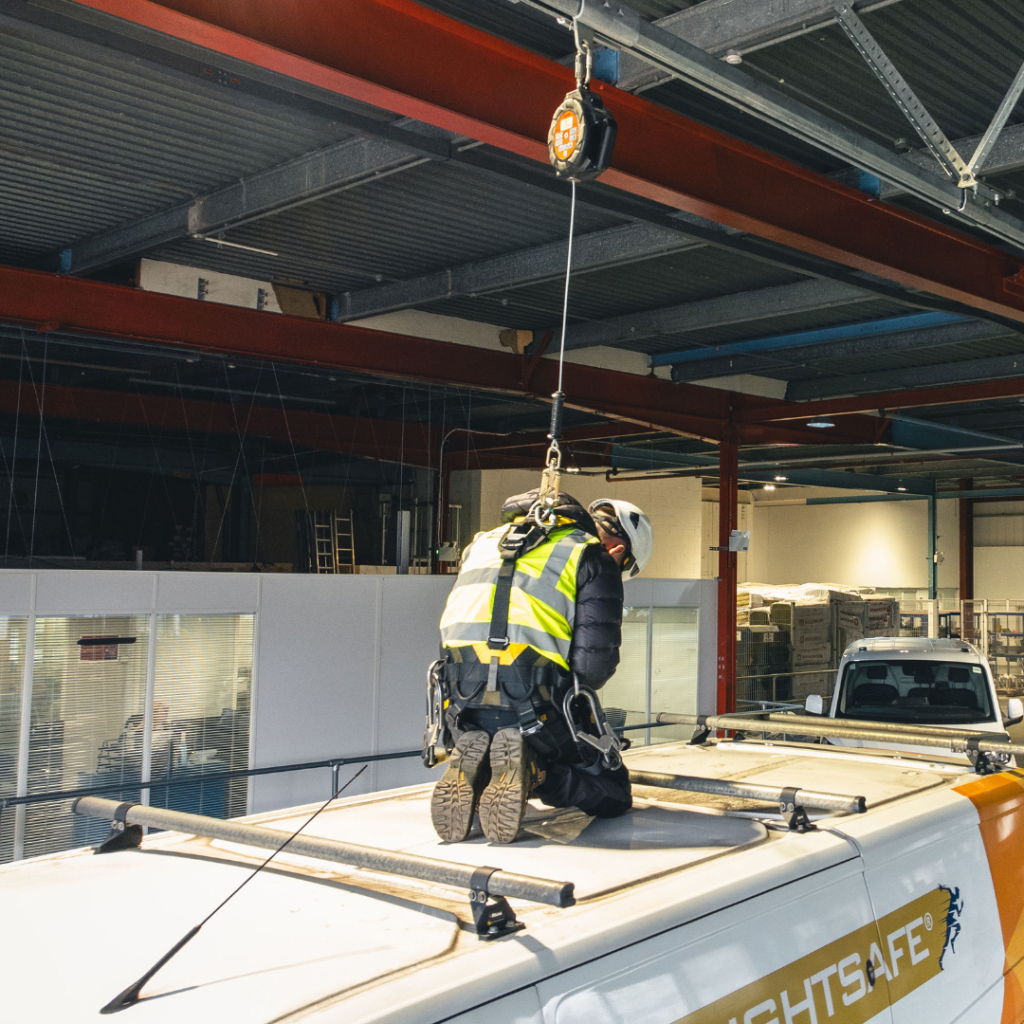
Vehicle Safety Fall Protection: From loading bays to maintenance depots, our vehicle fall protection solutions reduce the risks associated with working on HGVs, tankers, and trailers. Systems are designed to protect operatives without disrupting operations.
Bespoke Fabrication: Where standard systems don’t fit, our in-house design and fabrication team deliver customised solutions. We manufacture tailored safety equipment that meets unique building layouts, structures, and operational needs.
Work at Height Site Surveys: Before installation, our experts carry out comprehensive site surveys to identify hazards, assess risks, and recommend the most effective safety systems for your environment. This ensures compliance and peace of mind from the outset.
With Heightsafe as your work at height partner, you benefit from end-to-end expertise — from survey and design through to installation and ongoing compliance. Every solution is built to protect your people, extend the life of your assets, and ensure you remain fully compliant with UK safety regulations.
Client: Bowmer and Kirkland Location: Jackson Row & Bootle Street, Manchester City Centre
Heightsafe were appointed by principal contractor Bowmer and Kirkland to deliver a bespoke Work at Height solution for St Michael’s — a major city centre redevelopment led by Relentless, Salboy, and KKR.
Tasked with designing a discreet and future-proof system for safe façade and roof access, Heightsafe specified a combination of Abseil Rail and Davit Arm Systems. Collaborating closely with long-term partner FallProtec, our team engineered a custom solution that integrated seamlessly with the building’s tiered, glass-fronted architecture.
The result: a safe, sustainable access system that supports long-term maintenance while preserving the development’s striking design.
Speak to anExpert
Get in touch with Heightsafe’s friendly, professional team today for free, no obligation advice on your Work at Height requirements.
Introduction to Fall Restraint and Fall Arrest Systems
When it comes to working at height, safety should always be the first priority. The Work at Height Regulations 2005 require employers and building owners to put effective control measures in place to prevent accidents.